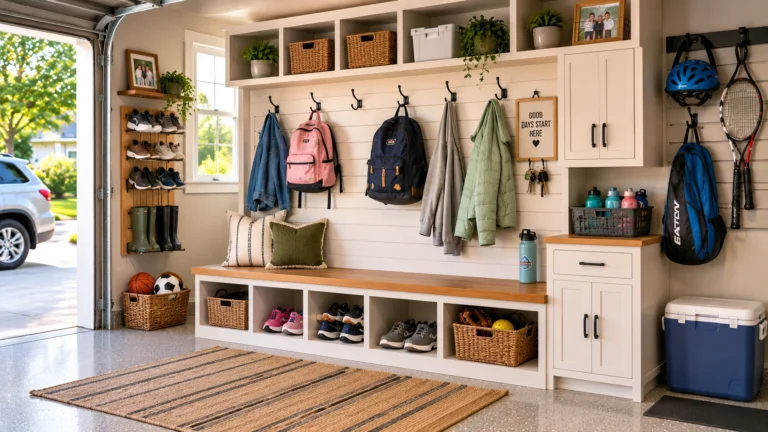
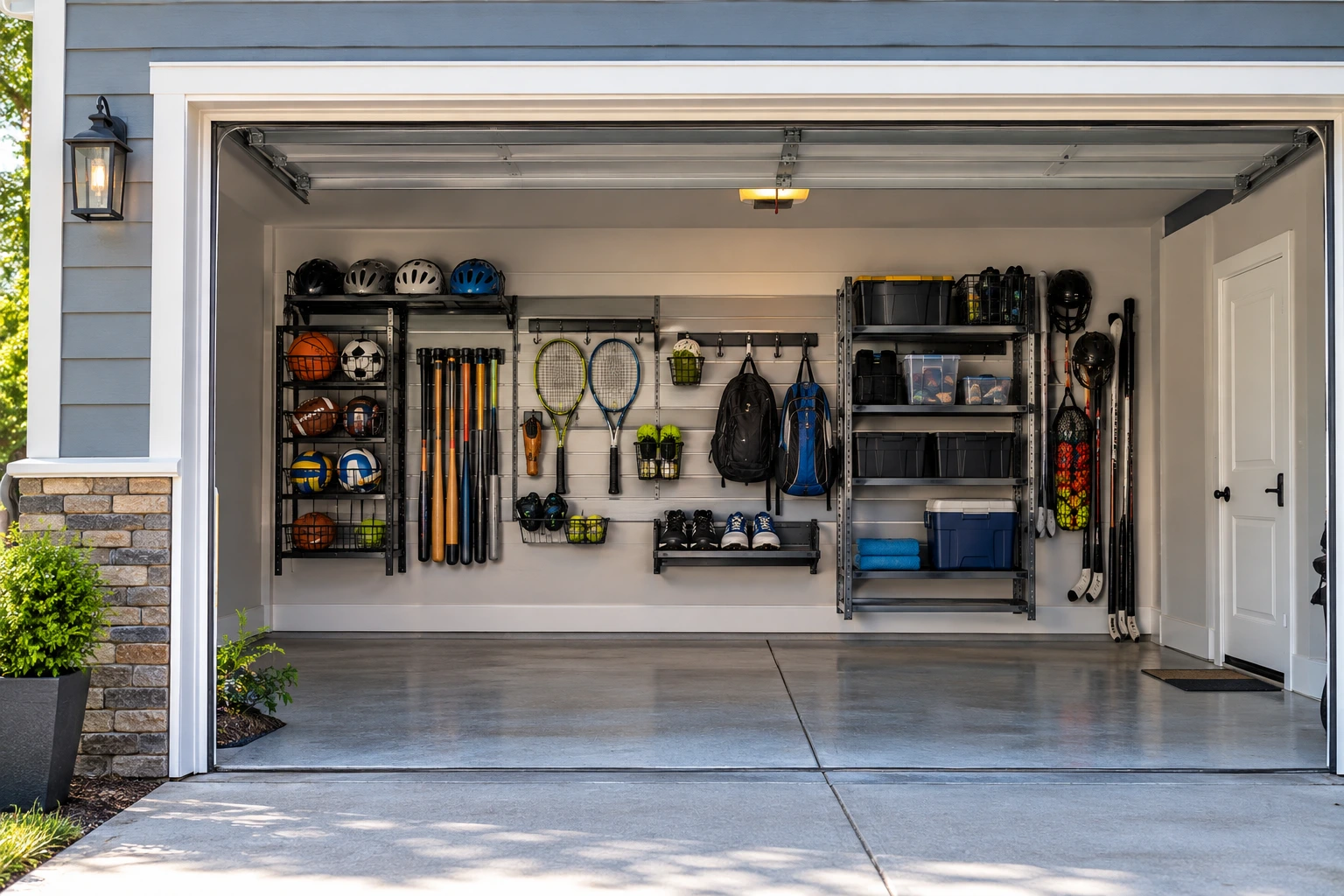
How to Store Sports Equipment in a Garage Without Creating Clutter?
Affiliate Disclosure: This article contains affiliate links. If you purchase through one of these links, we may earn a commission at no additional cost to you. As an Amazon Associate I earn from qualifying purchases.
Table of Contents
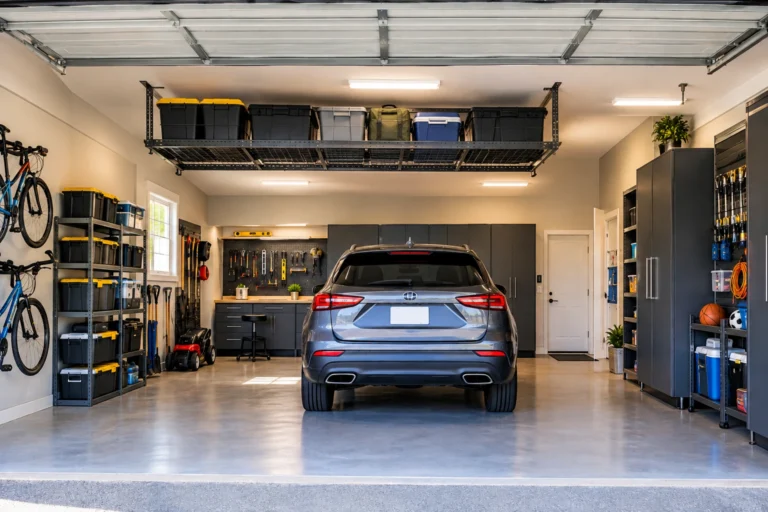
Sports equipment can take over a garage faster than you might expect. Basketballs roll under the car, bats lean against the wall, helmets pile up on a workbench, and sports bags collect beside the door. When several people share the same equipment area, the clutter can return almost as quickly as it is cleared.
The solution is not necessarily to buy more storage products. It is to create a system that matches the equipment you own, how often you use it, and how easily everyone can put it away.
To store sports equipment in a garage without creating clutter, start by sorting your gear, assigning a dedicated place to each category, and choosing suitable storage for balls, long equipment, bags, and smaller accessories. Keep everyday items accessible, allow damp gear to dry properly, and protect the space needed for parking and walking.
This guide walks you through the process, from planning your storage zones to choosing organizers and maintaining the setup. Whether you have a small garage or a large family sports collection, you can adapt the system to your space without turning the project into an expensive renovation.
For more inspiration, explore our guide to garage sports equipment storage ideas, which covers different ways to organize gear for an active household.
1. Start With How Your Household Uses Sports Equipment
Before measuring shelves or shopping for organizers, consider how sports equipment moves through your garage.
A storage system can look tidy but still fail if children cannot reach their gear, frequently used items are stored too high, or nobody knows where equipment belongs after practice. The best arrangement makes both retrieving and returning equipment straightforward.
Think about three things:
- Frequency of use: Which items are used every day, every week, or only during certain seasons?
- Who uses the equipment: Do adults, teenagers, or younger children need to access it independently?
- Where equipment enters and leaves: Does everyone collect gear near the garage door, beside a parked car, or near the door leading into the house?
Use these answers to decide where each category should go.
For example, if your family plays soccer several times a week, balls, cleats, bags, and shin guards should be grouped in an easy-to-reach area. Camping or winter sports equipment that comes out occasionally can occupy less accessible storage, provided it can still be retrieved safely.
The key principle: Store equipment according to how it is used, not simply according to the amount of empty wall or shelf space available.
2. Sort and Measure Before Buying Storage Products
Gather sports equipment from the garage, cars, mudroom, and other places where it tends to accumulate. Group the items by sport, then separate them into three categories.
- Regular-use gear: Equipment needed for current practices, games, workouts, and everyday recreation.
- Seasonal gear: Items used only during particular months or activities.
- Unused or damaged gear: Broken, outgrown, duplicate, or unwanted equipment that no longer needs a place in the garage.
Remove items that no longer belong in the collection before calculating how much storage you need. Otherwise, you may end up buying a larger organizer to accommodate equipment nobody uses.
Next, measure the equipment and the available storage area. Note the length of bats or sticks, the dimensions of bulky bags, the approximate number of balls, and the height available for shelves or wall-mounted organizers.
Also check the space around parked vehicles, doors, and existing storage.
These measurements help you avoid common purchasing mistakes, such as buying a rack that cannot hold your equipment or a deep shelf that interferes with parking.
3. Create Dedicated Sports Equipment Zones
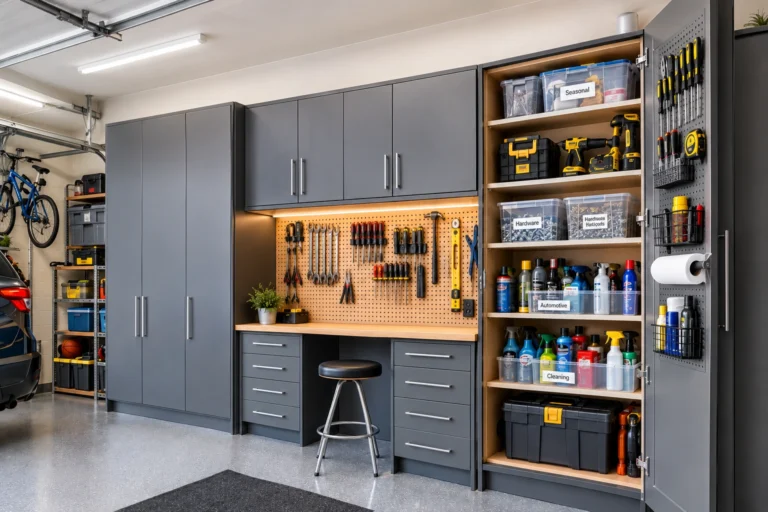
Once the equipment has been sorted, assign each category a permanent home. You do not need a separate cabinet for every sport; a few well-planned zones are often sufficient.
Ball zone: Keep basketballs, soccer balls, footballs, and other balls in a suitable rack, net, or open basket.
Bats and sticks zone: Use a suitable holder to keep long equipment together instead of leaning it against a wall.
Helmet and protective gear zone: Provide accessible shelves, hooks, or ventilated storage for helmets, gloves, pads, and other accessories.
Bag and footwear zone: Designate hooks for sports bags and a suitable shelf or tray for footwear.
Seasonal equipment zone: Store infrequently used gear in clearly labelled containers or other appropriate storage.
Keep related items together wherever possible. If a soccer bag is stored beside the ball rack and the accessories needed for practice, getting ready becomes simpler.
For a shared household, assign each person a specific hook, shelf, basket, or section. Labels or colour coding can help distinguish each person’s belongings without requiring an elaborate organizational system.
Leave a little spare capacity in frequently used baskets and bins. When every container is already overflowing, people are more likely to leave equipment on the floor.
4. Choose the Right Storage Method for Each Type of Gear
Different equipment needs different support. Balls roll, long items slide, small accessories disappear into crowded containers, and bulky bags take up considerable room.
Use the comparison below to narrow your options before purchasing anything.
| Storage method | Best suited for | What to check |
| Wall-mounted sports organizer | Mixed gear, bags, and selected accessories | Dimensions, mounting requirements, and supported equipment types |
| Ball rack or open basket | Basketballs, soccer balls, and other loose balls | Capacity, stability, and ease of access |
| Bat or stick holder | Long sports equipment | Fit, secure retention, and mounting method |
| Labeled bins | Small accessories and grouped equipment | Size, visibility, and ventilation needs |
| Shelving unit | Bags, containers, and bulky gear | Load capacity, depth, stability, and vehicle clearance |
| Hooks or bag holders | Sports bags and selected lightweight equipment | Hook size, weight rating, and suitable attachment point |
These options can work together. A wall organizer might handle everyday gear, while a nearby shelf stores bags and a small bin holds accessories.
Choose the simplest combination that solves your actual storage problems. A complicated system is not automatically better if it takes longer to use.
5. Use Wall Storage to Free Up Floor Space
Wall storage is especially useful for sports equipment that otherwise spreads across the floor or falls over when stacked in a corner.
A multi-sport wall organizer may combine hooks, baskets, and holders in one area. Depending on its design, it can accommodate selected balls, bags, and accessories without requiring a large freestanding unit.
Before choosing one, check the organizer’s dimensions and which equipment it is designed to hold. A general-purpose rack may work well for bags and smaller accessories but may not securely accommodate every bat, stick, racket, or helmet.
Consider these options:
- Multi-sport wall organizer: Useful when several types of equipment need a shared storage area.
- Wall-mounted ball holder: Helps prevent balls from rolling into parking or walking areas.
- Dedicated bat or stick holder: Keeps long equipment together and reduces the chance of it falling over.
- Adjustable wall track system: May provide flexibility when compatible hooks and accessories can be repositioned.
Do not assume that every wall can support a heavy organizer. Follow the manufacturer’s installation instructions and use mounting hardware suitable for the wall construction and expected load.
If your garage already has cabinets, tool storage, or shelving, plan the sports area so the systems do not compete for the same space.
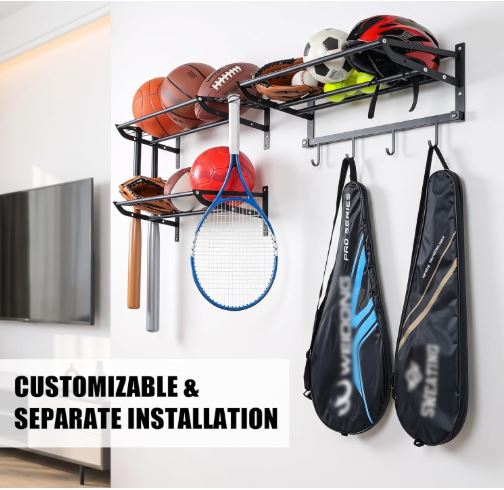
A wall-mounted organizer with suitable hooks and baskets can keep frequently used sports gear together while freeing up valuable garage floor space. Check its dimensions, mounting requirements, and supported equipment before buying. [#CommissionsEarned]
Order on Amazon →
6. Store Balls, Bats, Sticks, and Rackets Securely
Equipment shape should determine the storage method. Using one container for everything often makes retrieval harder and increases the chance of items falling out or becoming tangled.
Keep balls contained
Basketballs, soccer balls, and footballs are difficult to keep in place when left loose. A suitable ball rack, net, or open basket gives them a predictable home.
Choose a rack that accommodates the number and sizes of balls you own. Avoid overfilling it so that taking one ball out causes the others to fall.
For a smaller collection, an appropriately sized, stable basket may be enough. Place it where people can return balls without blocking a walkway or vehicle door.
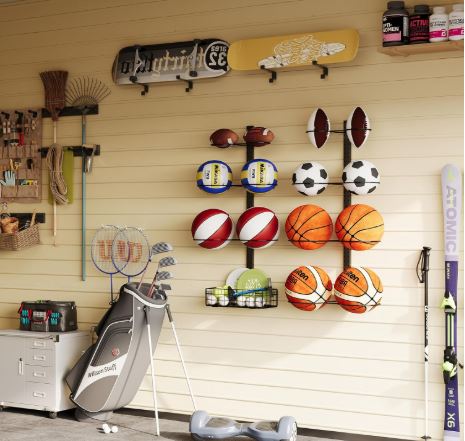
A dedicated ball rack keeps basketballs, soccer balls, and other compatible balls in one accessible location instead of letting them roll across the garage floor. Compare capacity and mounting requirements with your collection. [#CommissionsEarned]
View on Amazon →
Give long equipment a dedicated holder
Bats, hockey sticks, and similar equipment can slide out of corners or become tangled with garden tools. A dedicated holder keeps these items together and makes them easier to retrieve.
Check that the holder suits your particular equipment. Bats, sticks, and rackets may need different supports, so one generic holder is not necessarily suitable for all of them.
Keep sharp-edged or fragile equipment secured where it cannot easily fall onto people, vehicles, or other stored items.
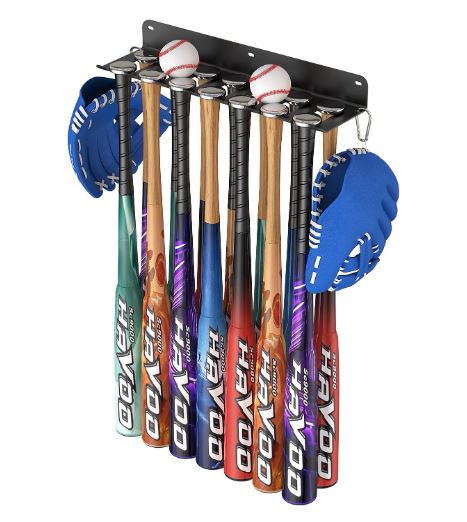
A dedicated holder can keep compatible bats or sports sticks upright and easy to retrieve. Choose a design that fits the length and shape of your equipment and secures it properly. [#CommissionEarned]
View Price on Amazon →
Give helmets and protective gear their own space
Helmets, gloves, pads, and protective accessories are easier to manage when they are not buried under bags or stacked loosely on a shelf.
Use suitable hooks, shelves, or ventilated storage that supports the equipment without crushing it. Allow damp gear to dry before returning it to enclosed storage, and follow the manufacturer’s care instructions.
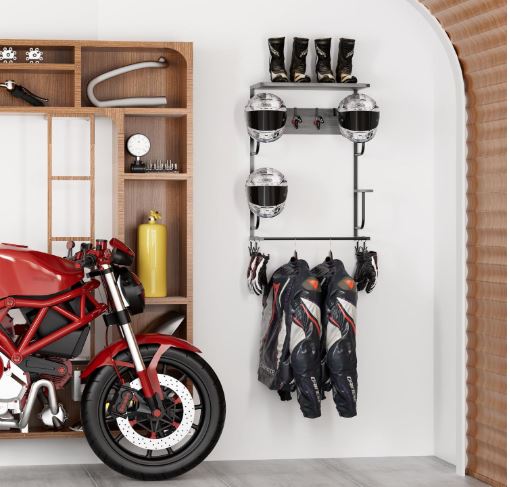
The helmet rack’s compact and efficient design maximizes storage space while minimizing floor space usage, making it an ideal addition to any entryway, garage, or storage room. [#CommissionEarned]
Buy on Amazon →
7. Use Labeled Bins for Small Accessories
Small accessories often create more clutter than larger items because they are easy to scatter and difficult to locate in a crowded container.
Examples include shin guards, gloves, wrist guards, smaller training equipment, pumps, and replacement accessories.
Use containers that match the quantity and type of equipment being stored. Smaller bins can keep accessories separated, while larger containers may work for bulky, lightweight items.
Simple labels such as “Soccer Accessories,” “Baseball Gear,” and “Training Equipment” help everyone identify the correct container. Colour coding can be useful when several family members share the garage.
Clear bins make contents easier to see. Opaque bins can create a tidier appearance on open shelves, but they benefit from readable labels.
Choose open or lidded containers according to how often the contents are used and whether they need airflow. Frequently used accessories may be easier to return to an open basket, while clean, dry, seasonal items can be kept in lidded containers.
8. Use Shelving for Bulky and Seasonal Equipment
Not every sports item belongs on a wall. Larger bags, coolers, seasonal accessories, and storage containers may fit better on shelves.
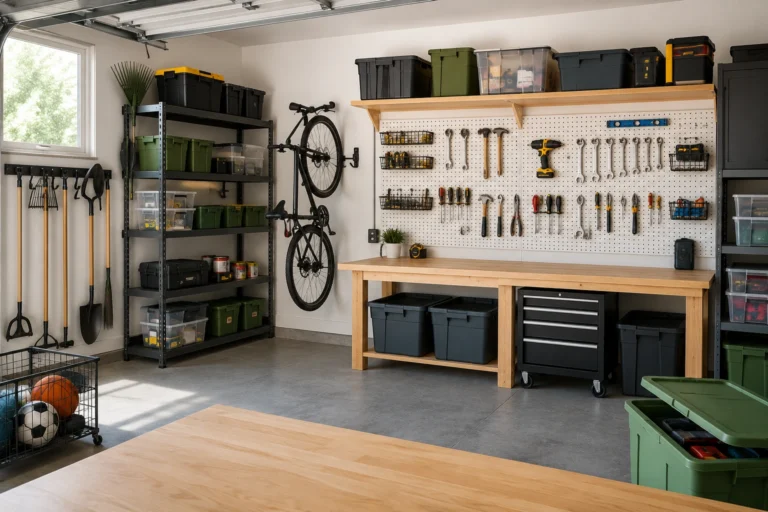
Adjustable garage shelving can help use vertical space while keeping the floor relatively clear. It is particularly useful when the amount of equipment changes throughout the year.
When arranging shelves:
- Keep frequently used gear on convenient shelves.
- Place heavier items on lower shelves.
- Group smaller items in suitable containers.
- Label containers that are not transparent.
- Leave enough room to remove items without shifting an entire stack.
Check the shelving unit’s stated load capacity and follow its assembly and anchoring instructions. Distribute weight appropriately and do not overload the shelves.
Give each shelf a clear purpose, such as sports bags, seasonal gear, or accessory bins. Otherwise, it can quickly become a dumping ground for unrelated household items.
Measure the available area before purchasing a unit. A narrow shelf that fits beside existing storage may be more practical than a deep unit that interferes with parking or walking space.
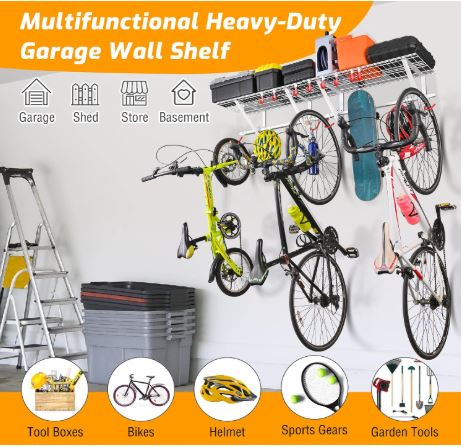
Adjustable shelving can provide dedicated space for sports bags, labeled containers, and seasonal gear. Check shelf depth, load capacity, stability, and the clearance available around your vehicle before choosing a unit. [#CommissionEarned]
Order on Amazon →
9. Create a Landing Area for Bags and Footwear
Sports bags and shoes are often the first things dropped when everyone returns home and the last things collected before leaving.
Create a small landing area near the garage entry, as long as it does not block a doorway or walking route. Use suitable hooks for bags, a shelf for clean footwear, and a boot tray for shoes that may carry dirt or moisture.
Keep bags upright where possible instead of piling them on the floor. If a bag contains wet clothing or sweaty equipment, empty it promptly and allow the contents to dry.
Do not automatically put every item back into a closed bag immediately after practice. Some equipment needs cleaning or drying before it is stored again.
A dedicated landing area also makes it easier to notice missing gear before the next activity. If your household frequently forgets equipment, consider keeping the items needed for each sport together rather than distributing them across the garage.
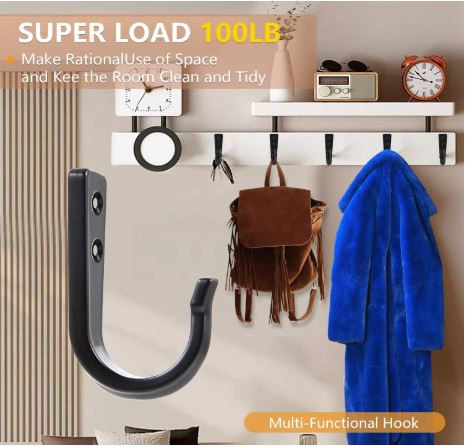
Suitable wall hooks can keep sports bags off the floor and close to the garage exit. Select hooks with enough space for the bags and install them using hardware appropriate for the wall and expected load. [#CommissionEarned]
View on Amazon →
10. Prevent Moisture and Odors Before Storing Gear
Garage organization is not just about where equipment fits. Its condition matters, too.
Wet cleats, sweaty gloves, damp pads, and sports bags can develop unpleasant odors when stored without adequate drying. Moisture may also damage some materials over time.
After practice or outdoor activities:
- Remove wet clothing and washable items from bags.
- Clean equipment according to its care instructions.
- Allow damp items to dry thoroughly in a suitable, ventilated area.
- Keep muddy or wet footwear on a tray until it can be cleaned and dried.
- Return dry equipment to its designated storage location.
Use ventilated baskets or open storage for items that need airflow. Avoid sealing damp equipment inside airtight containers.
If your garage is humid or prone to leaks, address the underlying moisture problem rather than relying on storage bins alone. Keep equipment away from known leaks and inspect stored items periodically.
Follow the manufacturer’s care instructions for helmets, pads, footwear, and other protective equipment. Avoid cleaning methods or heat that could damage materials.
11. Make the Layout Work in a Small or Shared Garage
Sports storage should support the garage’s other functions, including parking, walking, accessing tools, and carrying groceries into the house.
Before installing racks or shelves, measure the available wall and floor space. Account for vehicle doors, the garage door’s movement, entry doors, and the routes people regularly use.
If your garage is small, prioritize compact organizers and suitable wall storage before adding large freestanding units. Keep everyday gear within convenient reach and place infrequently used items in appropriate secondary storage.
For a garage that must accommodate a vehicle, test the proposed layout with the vehicle parked in its usual position. Check that equipment does not interfere with door opening, walking routes, or access to essential items.
If keeping enough room for your vehicle is a challenge, our guide on organizing a garage without losing parking space offers additional ideas for planning the layout.
Avoid putting heavy or awkward equipment in places where someone must climb on a chair or reach precariously over a parked car. Store items according to their weight, handling needs, and the manufacturer’s guidance.
For more ways to make limited space work, see our guide to small garage storage ideas.
12. Set Up a Simple After-Practice Reset Routine
A storage system is only useful if people can maintain it during ordinary busy days.
Create a short routine that everyone can follow after using the equipment:
- Return balls, bats, and accessories to their designated zones.
- Hang bags in the assigned area.
- Separate wet or dirty equipment for cleaning and drying.
- Return small accessories to their labeled containers.
- Clear anything that has drifted into the parking or walking area.
If several people use the equipment, explain the storage locations and make sure the arrangement is practical for everyone. Younger children may need lower baskets or simple labels, while adult-only or heavier equipment should remain in suitable secure locations.
Once a week, check for overflowing bins, misplaced items, and equipment that no longer belongs in the garage. When a new sport starts or the season changes, review the layout instead of letting new gear accumulate around the existing system.
The goal is not to keep the garage looking perfect every minute. It is to make restoring order quick and predictable.
13. Avoid These Common Sports Storage Mistakes
Even a well-intentioned setup can become cluttered when the storage method does not match the equipment or household routine.
Buying organizers before sorting: You may end up with the wrong dimensions or unnecessary accessories. Sort and measure your gear first.
Using one large bin for everything: Balls, helmets, gloves, and small accessories become harder to find when mixed together. Separate categories where needed.
Storing damp gear in closed containers: Allow equipment to dry according to its care instructions before placing it in enclosed storage.
Putting everyday equipment too high: Frequently used items should be easy to access safely. Reserve less accessible storage for suitable occasional-use gear.
Ignoring mounting and weight limits: Racks, hooks, and shelves must be appropriate for the equipment and installed correctly.
Blocking parking or walking space: Storage that interferes with everyday movement is unlikely to remain practical. Check clearance before committing to the layout.
Making the system too complicated: If returning equipment takes too many steps, people may leave it wherever they last used it. Favor simple, predictable storage locations.
Frequently Asked Questions
What is the best way to store sports equipment in a garage?
The best method depends on the equipment and available space. Wall-mounted organizers can suit selected balls, bags, and accessories; dedicated holders work for compatible long equipment; bins help group small items; and shelving can accommodate bulky or seasonal gear. Start by sorting the equipment and assigning each category a dedicated place.
How can I store sports equipment in a small garage?
Measure the available space, prioritize suitable wall storage, and use compact containers for smaller items. Keep frequently used gear accessible and place seasonal equipment in appropriate secondary storage. Check vehicle clearance and walking routes before installing anything.
How should I store wet sports equipment?
Clean and dry equipment according to its care instructions before returning it to enclosed storage. Use ventilated storage where appropriate, and do not seal damp clothing, footwear, pads, or bags inside airtight containers.
Are open bins or closed bins better for sports equipment?
Open bins are convenient for frequently used items that need to be returned quickly or require airflow. Closed bins can help contain dust and organize clean, dry, less frequently used equipment. Choose according to the contents and how often they are accessed.
How do I keep children’s sports equipment organized?
Give each sport or child a clearly designated basket, hook, shelf, or storage section. Keep everyday items within safe reach, use simple labels where helpful, and make returning equipment part of the after-practice routine.
Should sports equipment be stored on garage walls or shelves?
Wall storage can work well for equipment that needs secure support or otherwise occupies floor space. Shelves are useful for bags, containers, and bulky items that need a stable horizontal surface. Many garages benefit from combining both methods.
Final Thoughts
Storing sports equipment in a garage without creating clutter starts with a practical plan, not a shopping list. Sort the gear, consider how often each item is used, create dedicated zones, and choose storage that suits the equipment’s shape and handling needs.
Wall organizers can help free up floor space, labeled bins can keep accessories together, and shelving can provide a home for bulky or seasonal gear. Just as importantly, dry equipment properly, maintain clear parking and walking routes, and establish a simple after-practice routine.
Start with the biggest source of clutter in your garage and solve that problem first. A straightforward system that everyone can use consistently is more likely to stay organized than a collection of storage products without a clear purpose.